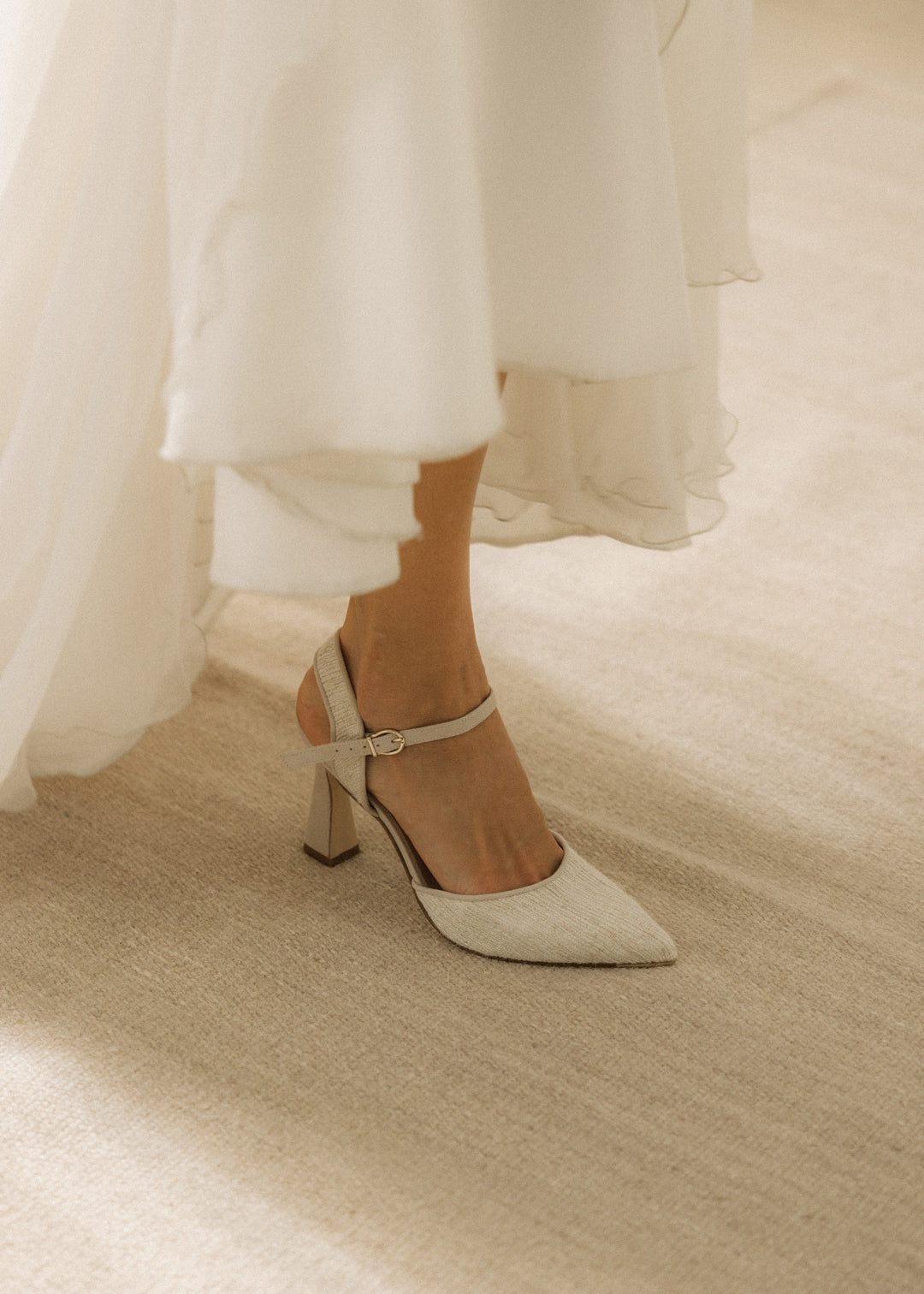
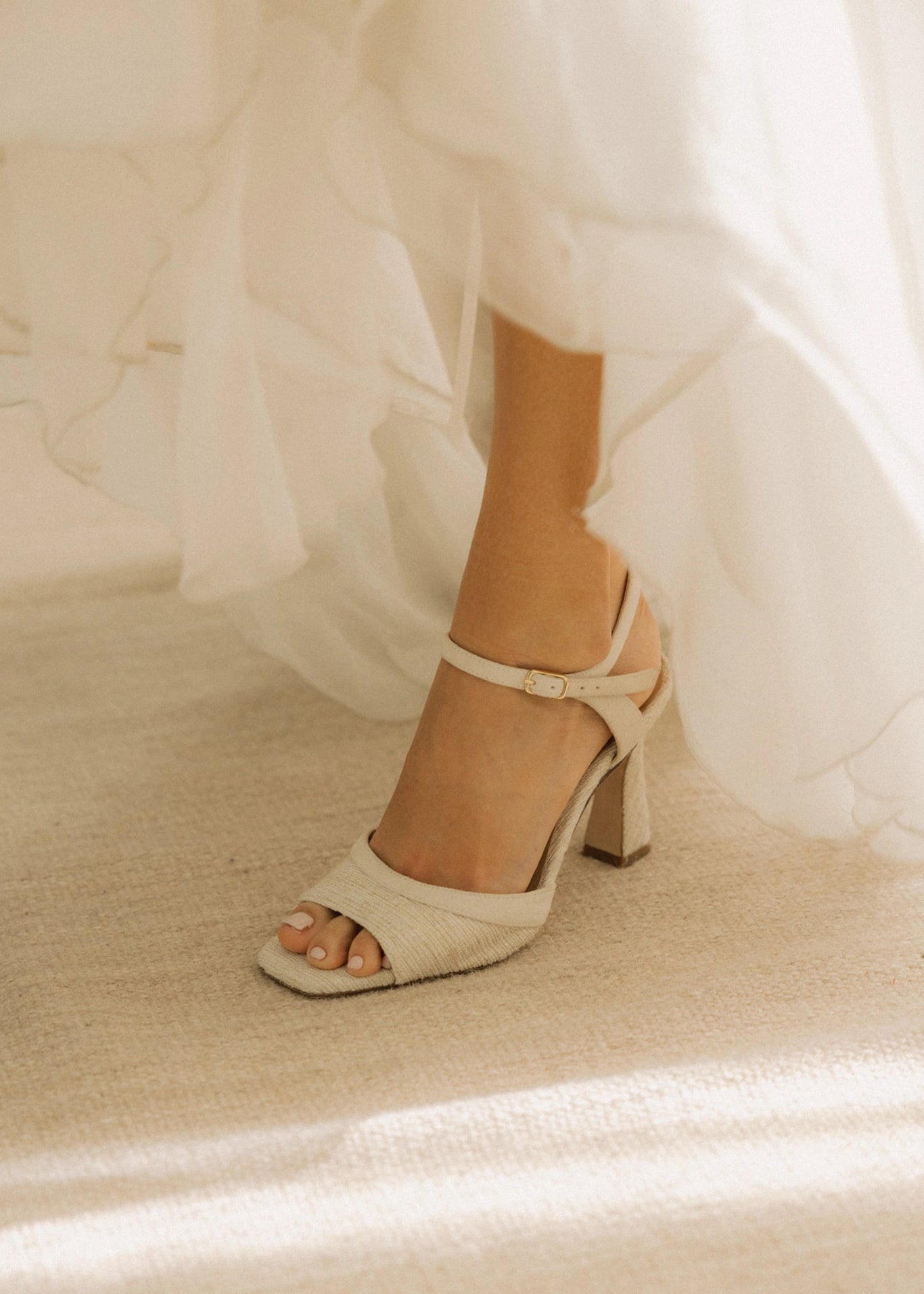
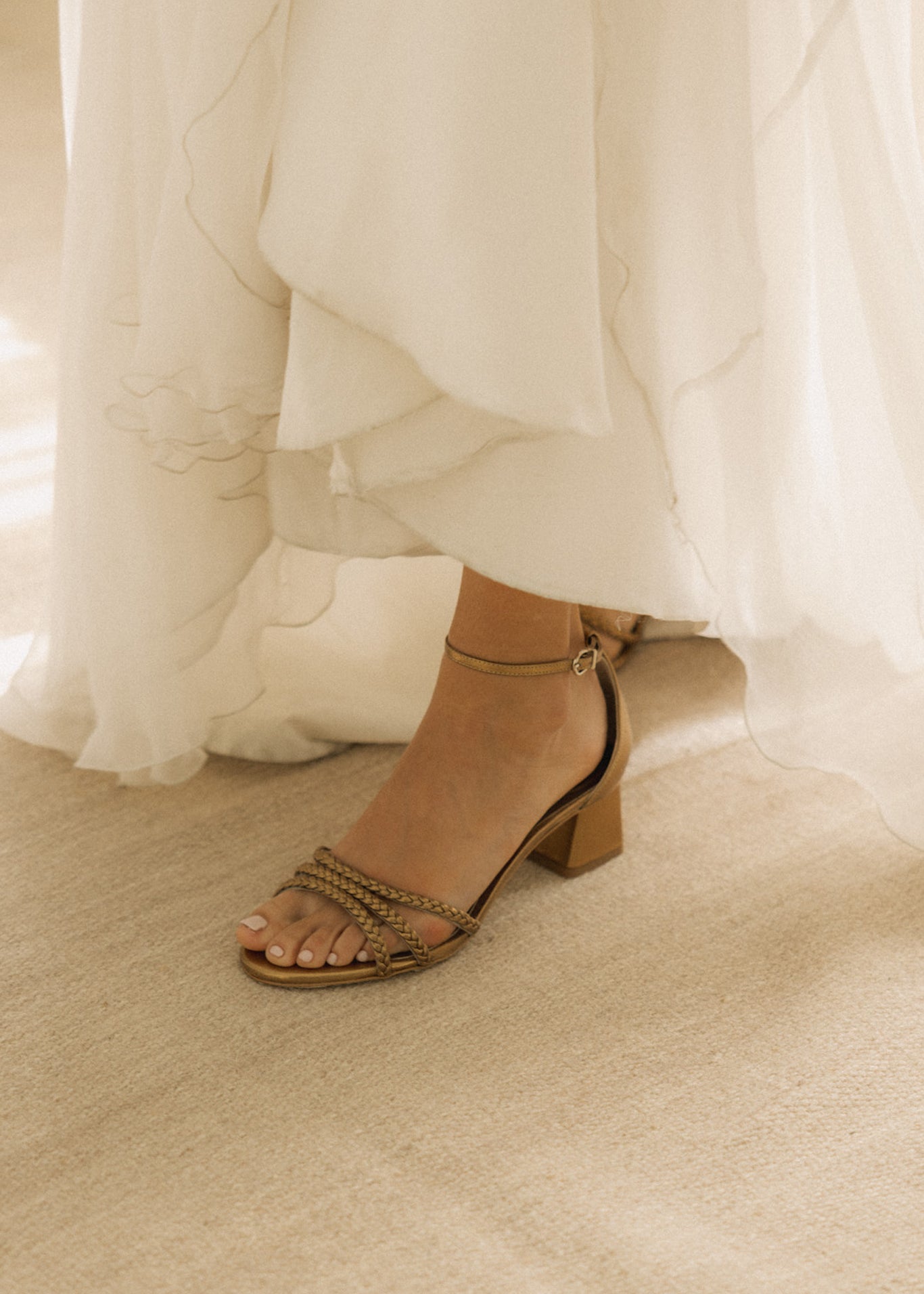
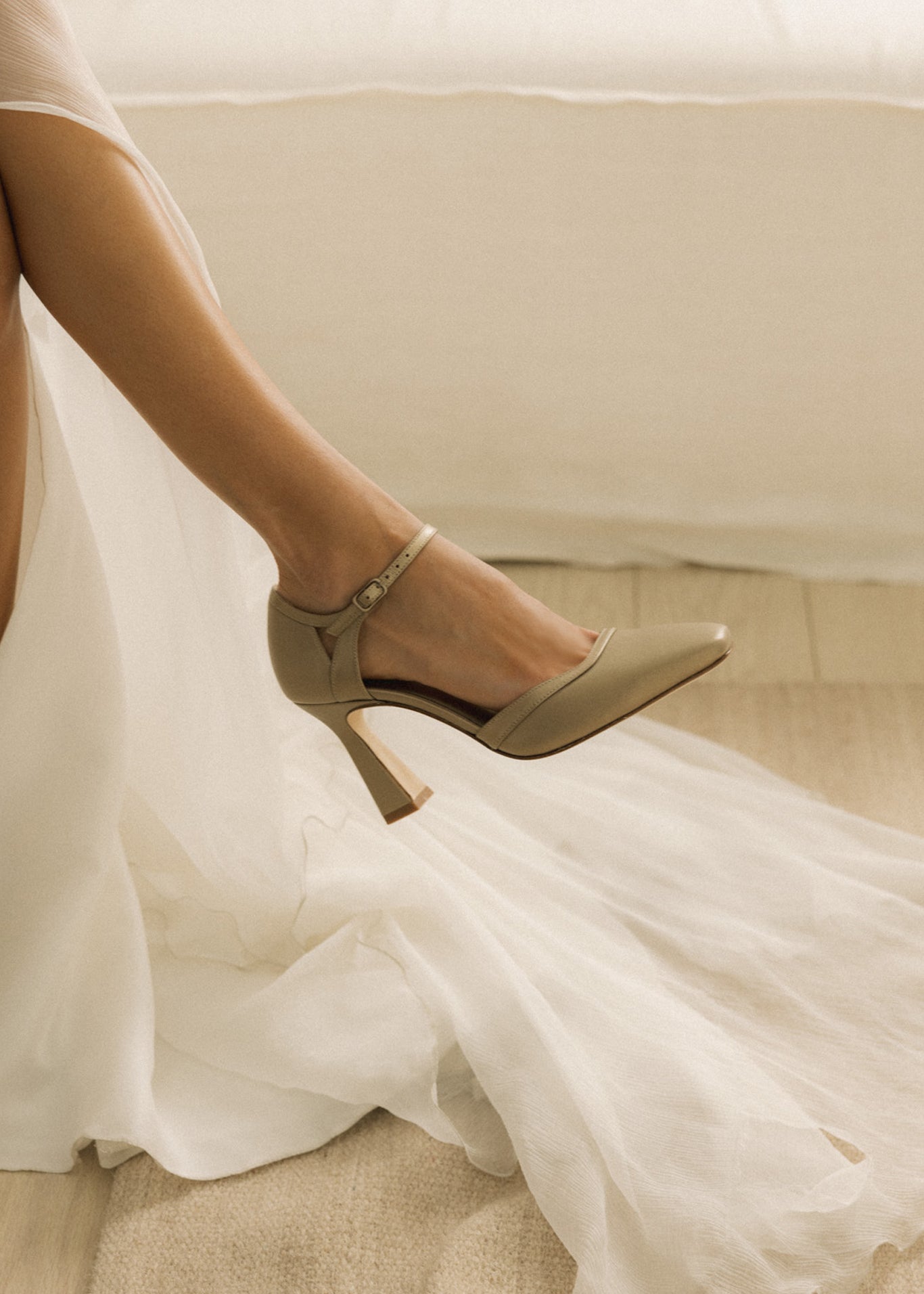
There's an idea that's repeated so often it's become accepted as truth without actually being true: that velvet is a winter fabric. That it's warm. That it provides heat. That wearing velvet shoes at a June, July, or August wedding is imprudent.
It is not.

Velvet has a reputation as a warm fabric because we associate it with coats, curtains, and the sofas in grandparents' homes in winter. But velvet as a fabric that covers an entire body—a dress, a cape, a blanket—is one thing, and velvet as a textile finish on the last of a shoe is quite another.
On a shoe, velvet is not the garment; it's the skin.
The warmth a foot feels inside a shoe depends on three things: the inner lining, the sole, and the ventilation of the design. It does not depend on the outer fabric that is visible.
Our velvet shoes are leather-lined on the inside and supported on the same last and sole as any other model in the collection. Here, velvet is a surface: a centimeter of fabric over a structure that breathes exactly like a satin, smooth leather, or fabric shoe.

In other words, a velvet pump is no warmer than a leather pump of the same cut. The thermal sensation is determined by the lining and the last, not the color or texture you see from the outside.
Choosing wedding shoes shouldn't be a negotiation between what you want and what you "supposedly" have to wear according to the season. Velvet provides something no other fabric can: a depth of color and a play of light that is unmatched by any other material. That midnight blue, that bottle green, that burgundy that looks flat in satin, takes on volume in velvet.
To forgo that for a mistaken thermal idea is to forgo it unnecessarily.
Velvet is not a season. It's a finish. And as a finish, it behaves exactly like any other leather-lined material on the same last: no more heat, no less.
Velvet is for summer because, in reality, it always was.